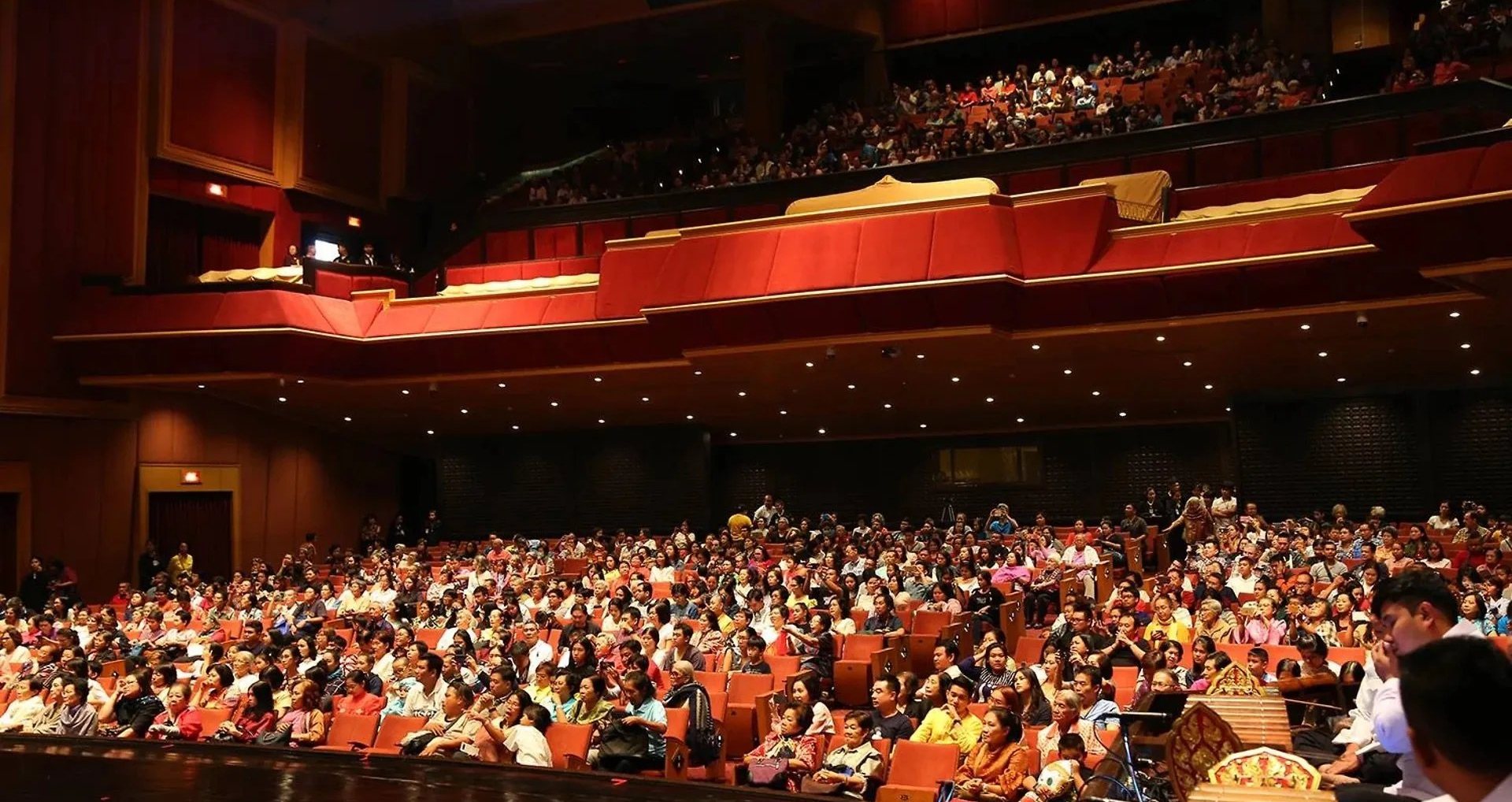
Audience in a refurbished concert hall

The National Theater

A New Chapter For A Cultural Landmark
Bangkok, Thailand

A major refurbishment renews Thailand’s National Theater for contemporary
performance, with new interior finishes by designers Sasikarn Chaitaweep 
and Wuttinun Chansirivanich, including carpet supplied by Feltech.

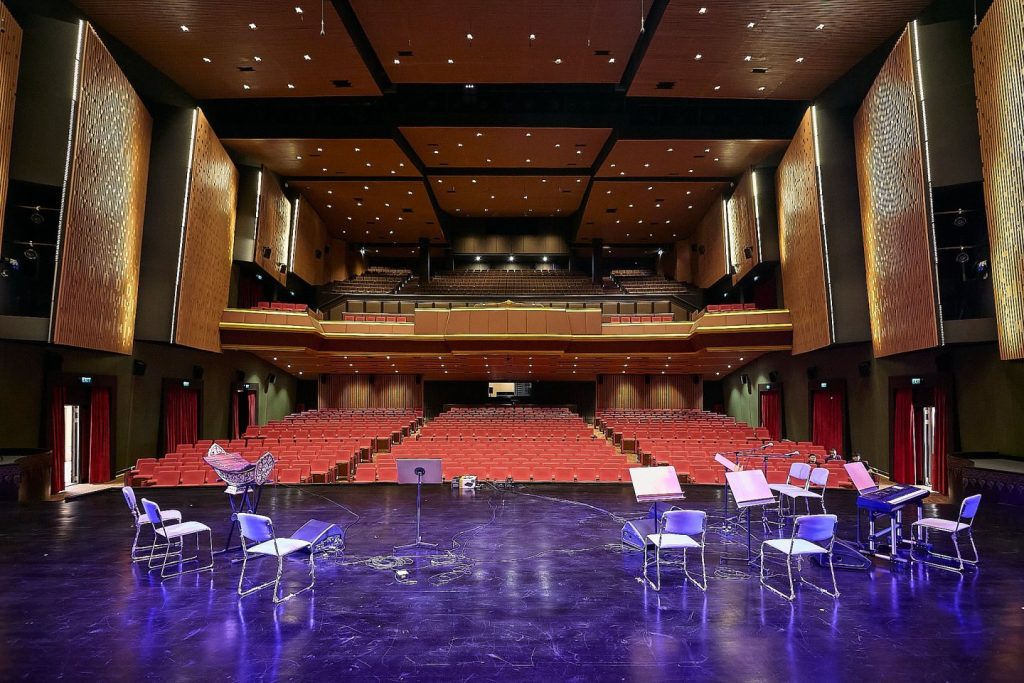
Concert hall stage seen from the stalls
Project
The National Theater
Location
Bangkok
Client
Zonic Group
Interior designer
Zonic Vision
Area
70 sq.m.
Photography
ANOTHERSPACE
Publication date
August 2026

The value of cultural heritage from the past is perhaps most powerful when brought to life in ways that resonate deeply with audiences. As entertainment technology continues to advance, this latest transfor-
mation of the National Theater marks a major milestone—reflecting the enduring elegance of Thai arts and culture while embracing innovation to deliver a complete sensory experience. From updating the venue’s appearance to integrating modern stage technologies, the renovation elevates Thai performing arts to international standards.

Since the National Theater first opened its doors in 1965, this marks its most extensive renovation to date. The project, which ran from 2022 to its completion in 2026, was brought to life by a team from the Fine Arts Department: Chakraphan Watchararuangchai (Senior Professional Architect), Wuttinan Jinsiriwanich (Senior Professional Interior Designer), and Sasikarn Chaitaveep (Practicing Interior Designer).

The renovation addressed a broad spectrum of requirements, spanning architectural design, interior spaces, and performance systems. Architecturally, key upgrades were made to meet modern public building standards, including fire escapes, access ramps, 
fire protection systems, and reconfigured entry and exit points for greater convenience, fully adhering to Universal Design principles.

The interior design brief focused on two main areas: the entrance lobby and the main auditorium. In the lobby, the design preserves its classic heritage while introducing a fresh, modern aesthetic through a vibrant pastel orange-and-white color palette that harmonizes with decorative elements preserved since the theater’s earliest days.
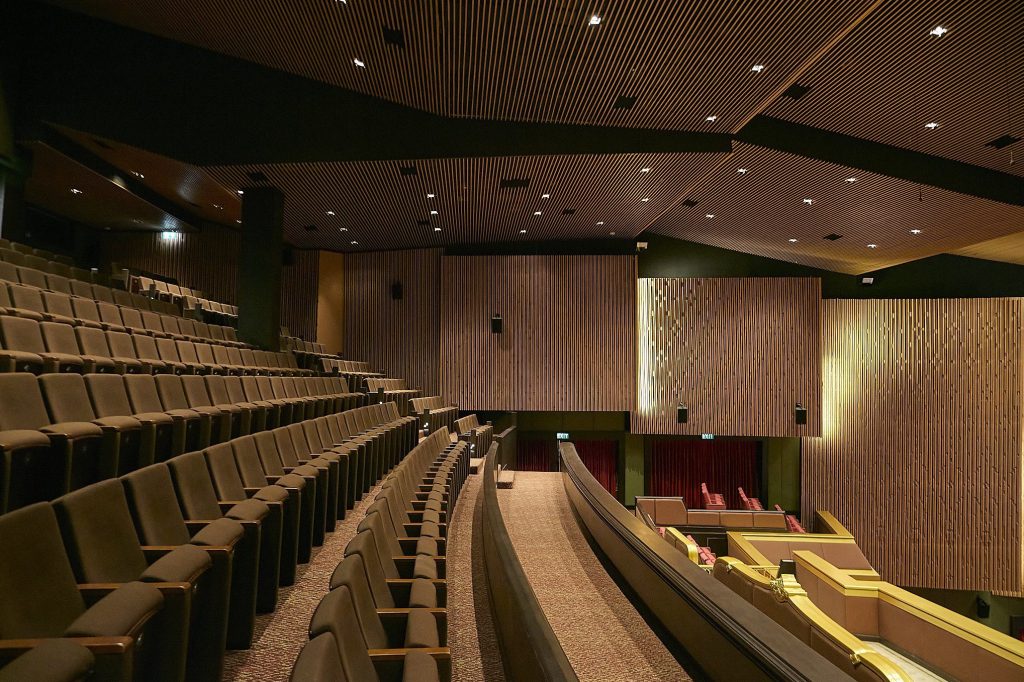
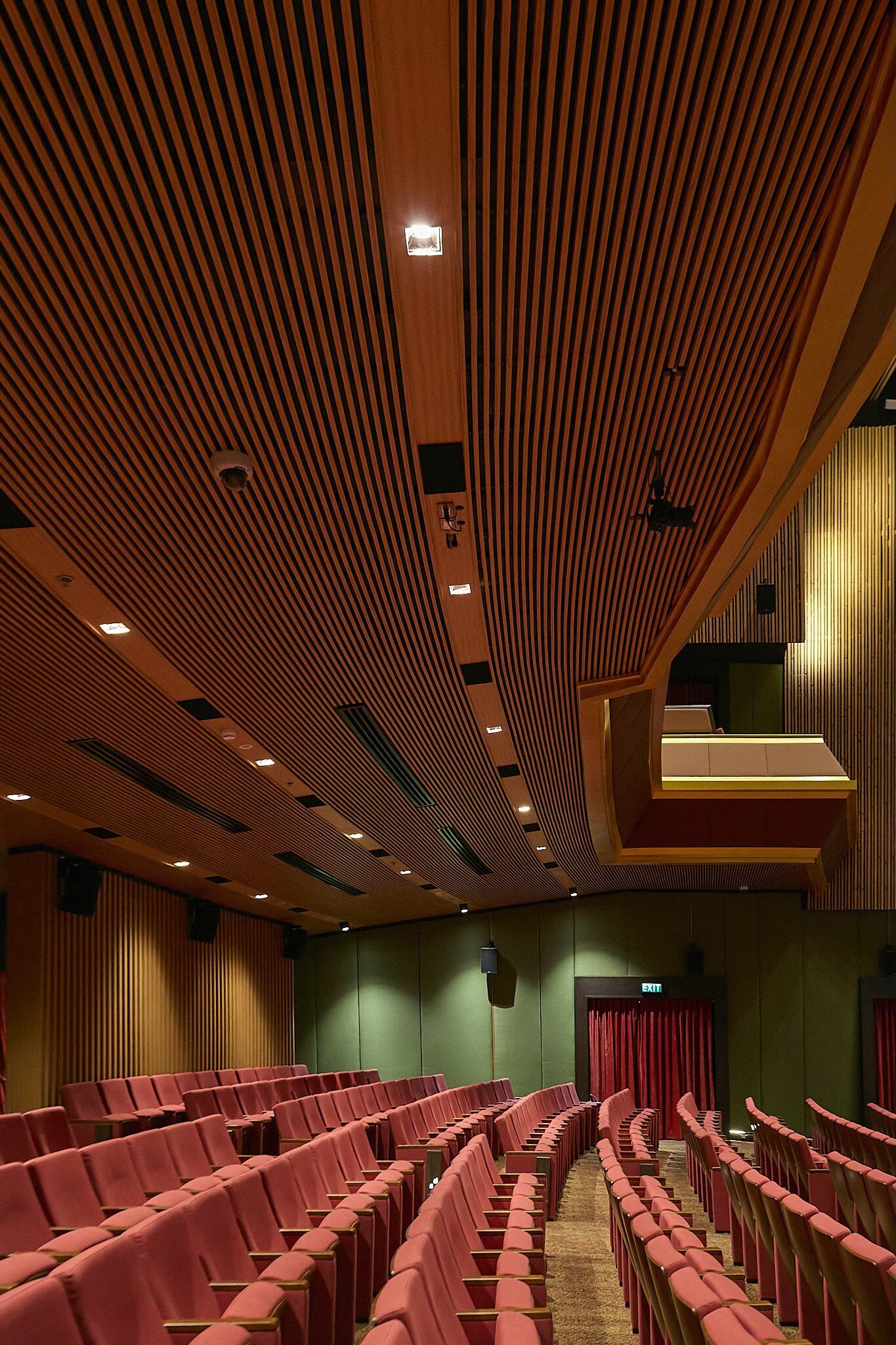
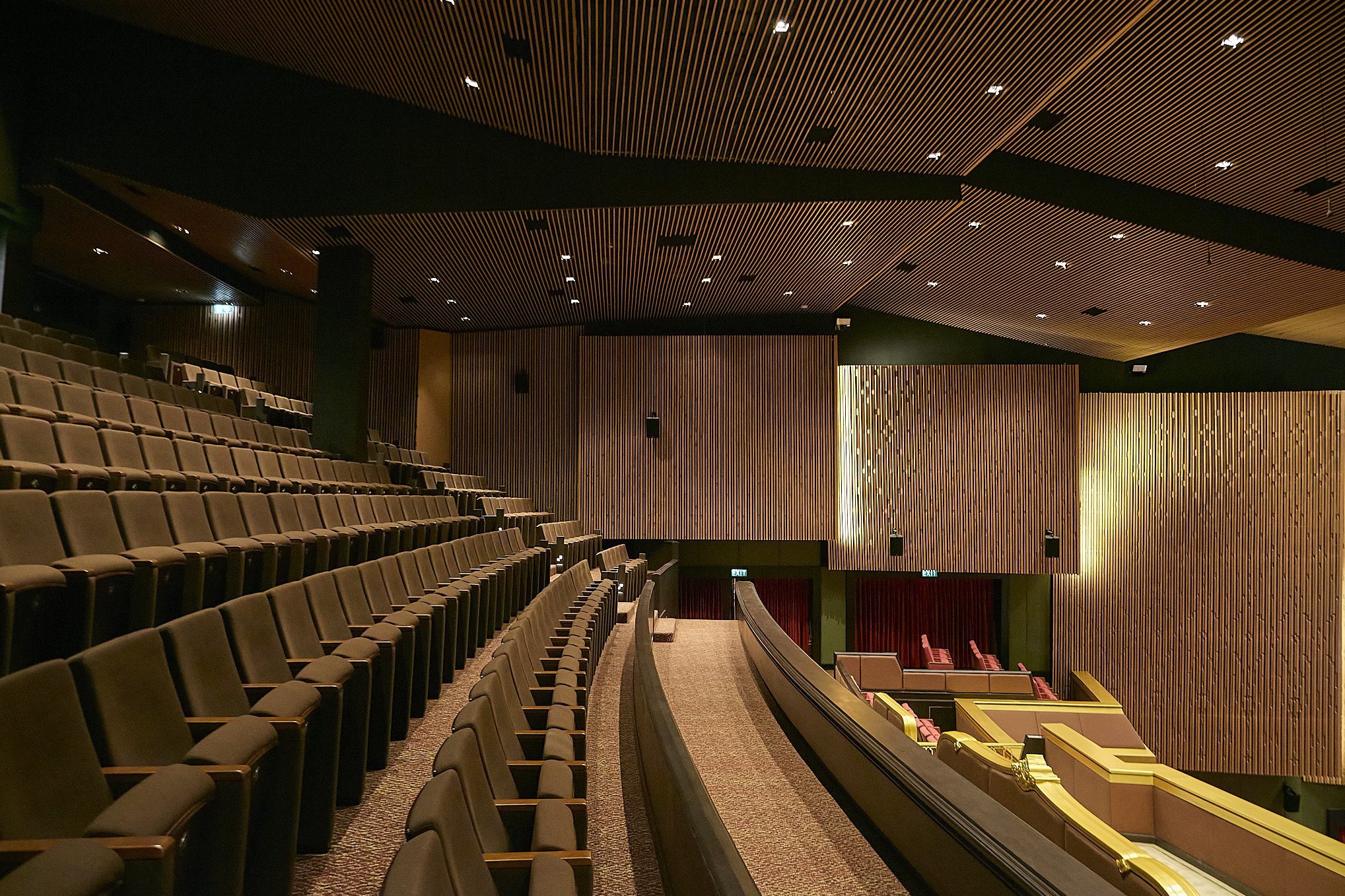
Balcony seating with timber wall panels

Renewing The Experience
Of The Theater

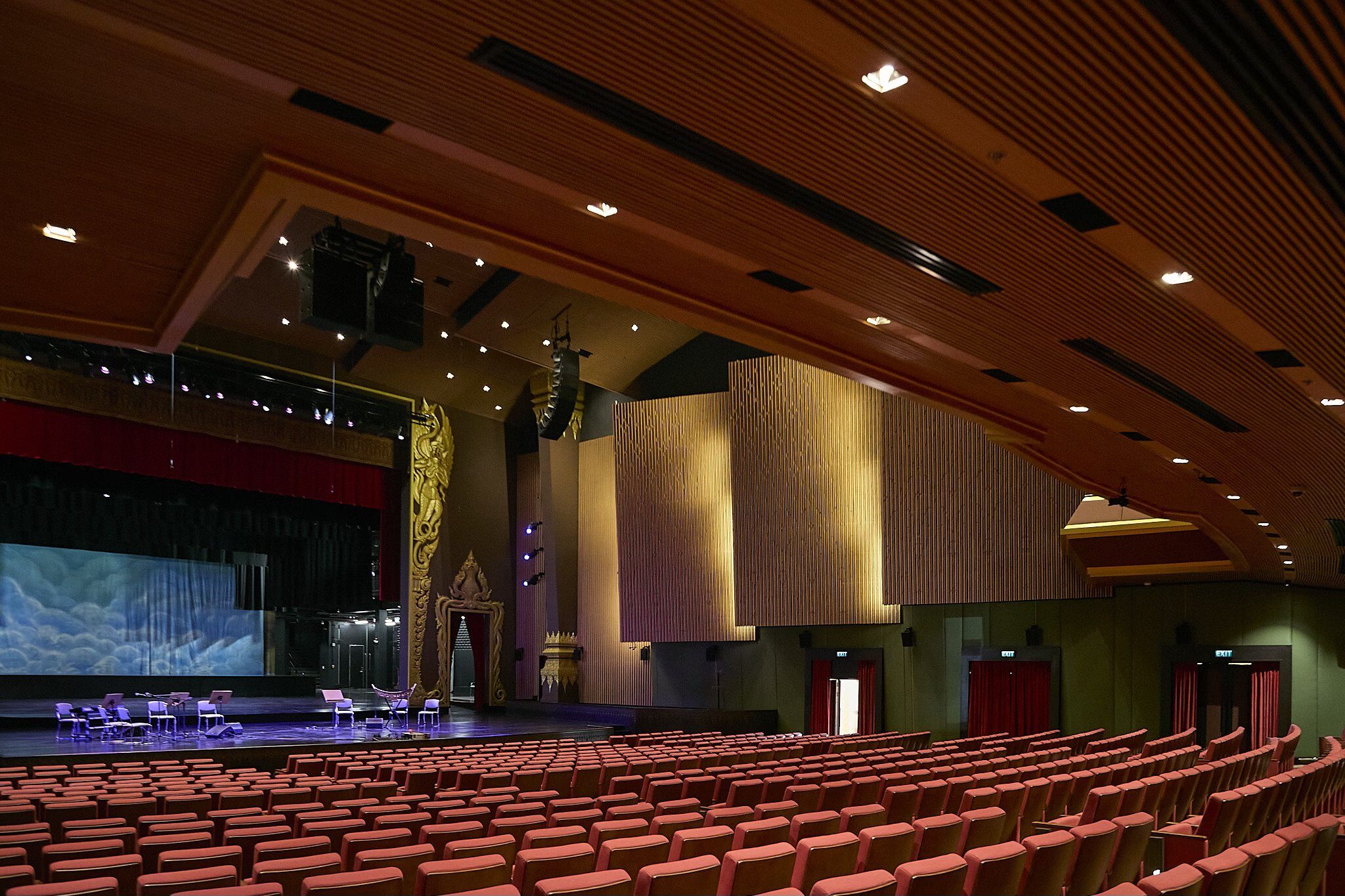
The greatest interior design challenge of this restoration lay within the main auditorium. Stepping inside, visitors immediately sense a sense of complete isolation from the outside world—underscoring the theater’s most critical requirement: precise acoustic control. Achieving a signifi-
cantly lower reverberation time of 0.8 to 1.0 seconds (down from the previous 1.2 to 1.5 seconds) required the meticulous design and treat-
ment of interior surfaces, striking a delicate balance between optimal acoustic performance and visual elegance.

Traditionally, Thai theatrical performances relied on a smooth ceiling to reflect sound passively from the stage to the rear seats. However, this renovation called for a state-of-the-art sound system capable of ele-
vating the full spectrum of live performances—from traditional Thai music to Western symphonic orchestras requiring electronic amplifi-
cation.

To meet this challenge, the design team first reduced the natural reflectivity of the physical surfaces, laying the foundation for Yamaha’s Active Field Control (AFC) technology. This active acoustic system simulates tailored reverberation profiles for different genres through custom presets, offering spatial audio positioning that envelops the room to create a truly immersive and authentic listening experience.

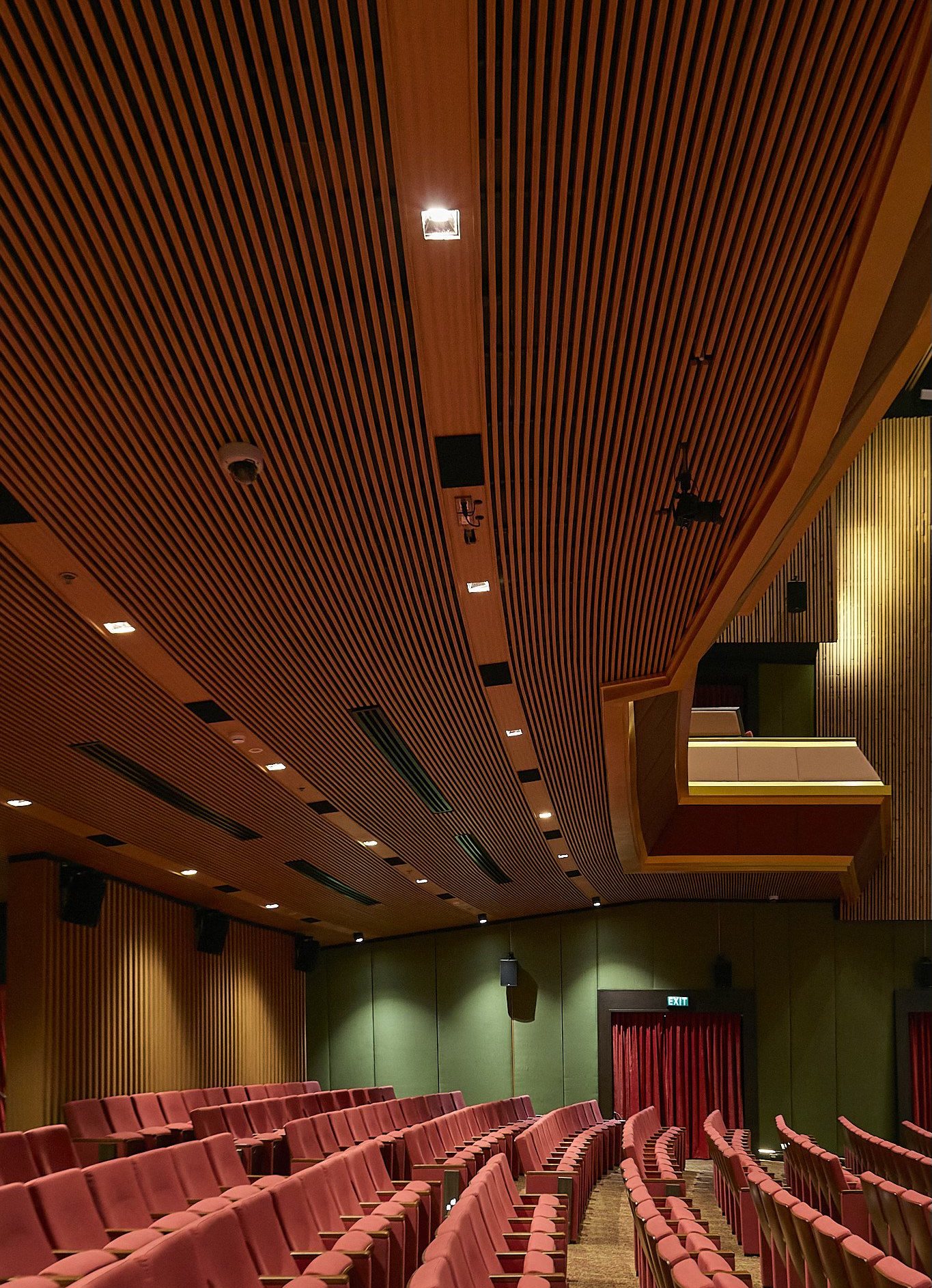
To achieve comprehensive sound absorption, the surface treatment began with the design of timber acoustic slats inspired by traditional Thai textiles, bringing a distinct Thai character to the space through patterns drawn from the country’s craft heritage. Solid wood was chosen for its acoustic properties, featuring carefully routed grooves and precisely spaced slats that create a dimensional interpretation of woven fabric. This visual theme flows seamlessly into the auditorium’s carpet design, creating a cohesive dialogue throughout the space. This design concept harmoniously unifies form, function, and cultural identity. 

The natural properties of real wood, combined with the calibrated spacing of the slats, meet the theater’s acoustic requirements, while the textile motif introduces warmth and an instantly recognizable cultural reference. In doing so, it meaningfully carries Thai identity forward into contemporary interior architecture.

Another refined detail of the interior design is its intentional color palette, which injects fresh vitality into the auditorium. Drawing inspiration from the theater’s iconic red stage curtain, the designers introduced deep green—its complementary color—to create contrast and give the space a more contemporary mood. The deep green surfaces carry a subtle luster that blends naturally with the red, framing the stage and allowing it to command full attention while enriching the hall with a luxurious, intimate, and aesthetically dynamic atmosphere.

A Material Underfoot

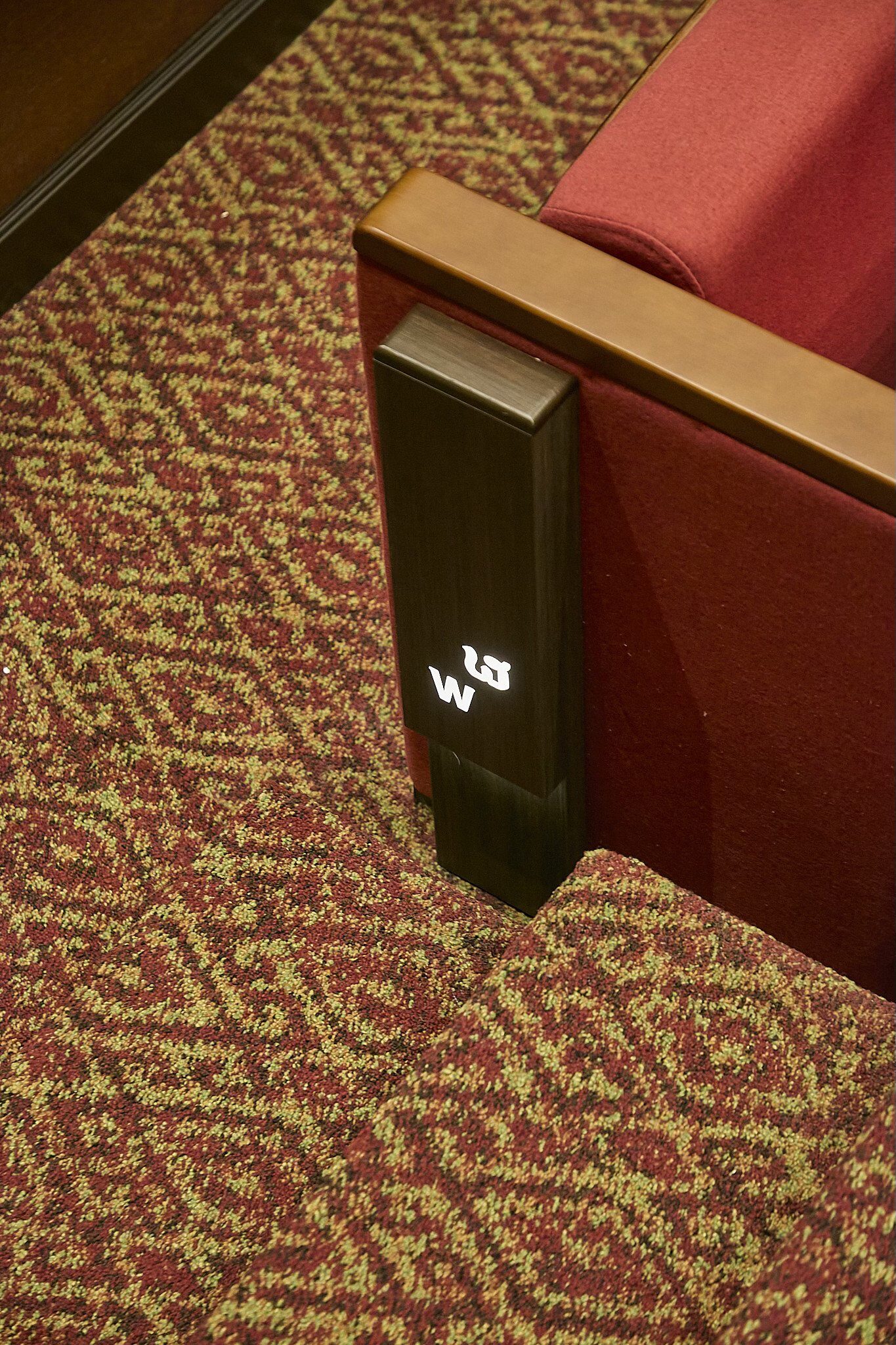
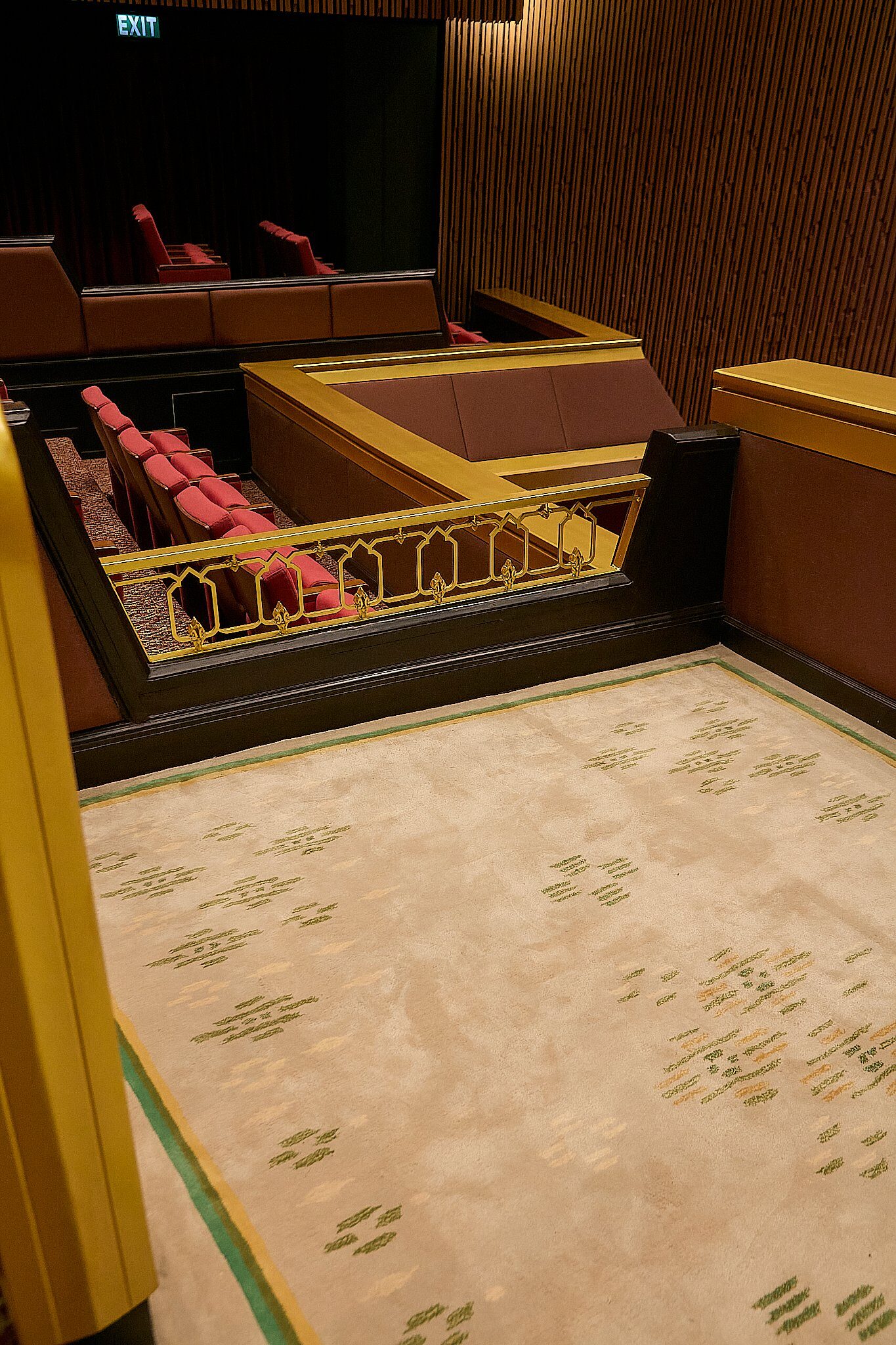
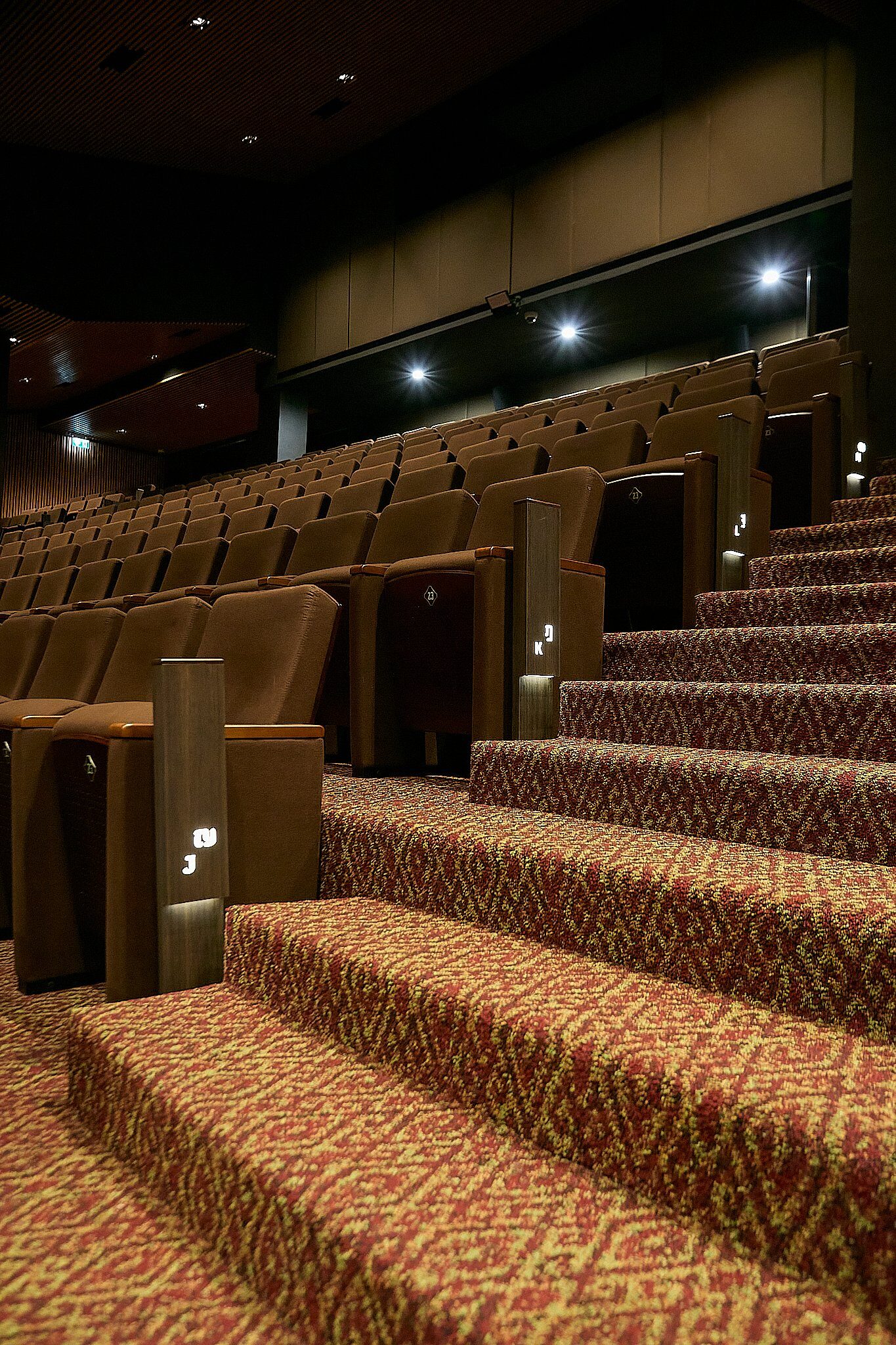
Flooring plays an essential role in the theater experience—not only for comfort underfoot, but also in shaping the overall atmosphere and delivering the high level of acoustic absorption required. Every carpet throughout the theater was meticulously redesigned to add visual depth while subtly guiding movement through design. Distinct patterns were assigned according to spatial function: along the aisles, delicate floral motifs remain discernible in dim lighting to define circulation paths; standard seating areas employ a more understated pattern; and most notably, the Royal Seating Area receives an exclusive treatment featuring a prominent central floral motif that softly diffuses outward in intricate layers.

For the carpet tiles used throughout the auditorium, the designers developed a series of modular, randomized patterns that integrate naturally with the function of each zone. For carpet manufacturer Feltech, the primary challenge was weaving a bespoke carpet exclusively for the National Theater. This highly complex commission required bridging industrial production with the tactile quality of bespoke craftsmanship. Beyond aesthetics, the acoustic carpet was engineered to meet international fire and safety standards for public buildings while withstanding heavy foot traffic, performance after performance.

Another vital element was integrating iconic Thai cultural motifs directly into the weave. The design process began by deconstructing the structural grids of classic Thai patterns—such as Lai Prajam Yam (four-petaled floral emblems) and Lai Phum Khao Bin (lotus-bud motifs)—and abstracting them into geometric forms to create a modern Thai aesthetic.

When woven across large panels, the patterns align seamlessly to form an uninterrupted surface. The motifs alternate between dense clusters and open areas, while sculpted variations in pile height add a tactile, multidimensional quality to the floor, transforming the carpet into an immersive work of art.

To enhance color richness, Feltech’s engineering team custom-blended metallic yarn with durable nylon, creating a bespoke weave developed exclusively for the National Theater. Together, these fibers create a subtle shimmer under the stage spotlights. They are woven alongside deep crimson yarn—a classic theater shade that conveys power and grandeur—and muted gold or warm cream tones that soften the geometry, blend gracefully into the dimly lit interior, and help disguise signs of foot traffic.
Executing this weave demanded meticulous technical precision. Because metallic yarn has low elasticity and tends to snap, loom tension had to be carefully calibrated to prevent the metallic thread from damaging or fraying adjacent fibers. Throughout production, color saturation was carefully controlled so the carpet enhances the hall’s ambiance without drawing attention away from the stage.

This process relied on close collaboration between the design team and carpet manufacturer Feltech, bridging artistic concepts with industrial production through careful coordination. Feltech’s design team oversaw pattern development, material selection, and technical production requirements, while the theater’s interior design team evaluated each proposal to ensure visual consistency across the venue.

Once the design was approved, Feltech’s manufacturing facility handled the production process, from machine weaving and carpet pile quality control to meticulous finishing. During installation, Feltech’s specialized technicians carefully matched the patterns across each seam to create a continuous surface, while addressing on-site challenges as they arose. Throughout the project, Feltech placed strong emphasis on clear communication and coordination among all parties, ensuring that the work was completed on schedule while meeting both the aesthetic and functional requirements of the theater.

Working With An Existing Identity

Overall, this renovation empowers the National Theater to meet the full needs of contemporary users while honoring its storied legacy. For theatergoers, every facet of the audience experience has been heightened—from seat ergonomics to the immersive synthesis of light, color, and sound on stage. For crew members behind the scenes, the project significantly elevates safety, 

wellness, and working conditions through modernized structural engineering and stage systems built to international standards. These include advanced motorized stage machinery and rigging that safely execute complex scenery changes with pinpoint precision, alongside upgraded HVAC and filtration systems that ensure a healthier indoor environment for all.

The National Theater has witnessed pivotal milestones along the nation’s historical corridor. Following the “Roots of the City, Path of Rattanakosin” trail—a Fine Arts Department initiative designed to weave together the heritage sites surrounding Rattanakosin Island—each landmark across the historic Front Palace (Wang Na) district narrates a chapter of cultural evolution, with the National Theater standing as the culminating destination that ushers Thailand’s performing arts legacy gracefully into the future.

Ultimately, this grand renovation represents far more than a physical restoration. It prepares a dynamic stage where Thai performing arts can continue to resonate, adapt, and flourish in step with modern times. By pairing creative interior design with cutting-edge production technologies, the renewed theater unlocks its full potential—ensuring that the spatial experience itself remains a vital catalyst in keeping Thai performing arts vibrant, relevant, and deeply rooted in the hearts of audiences for generations to come.